

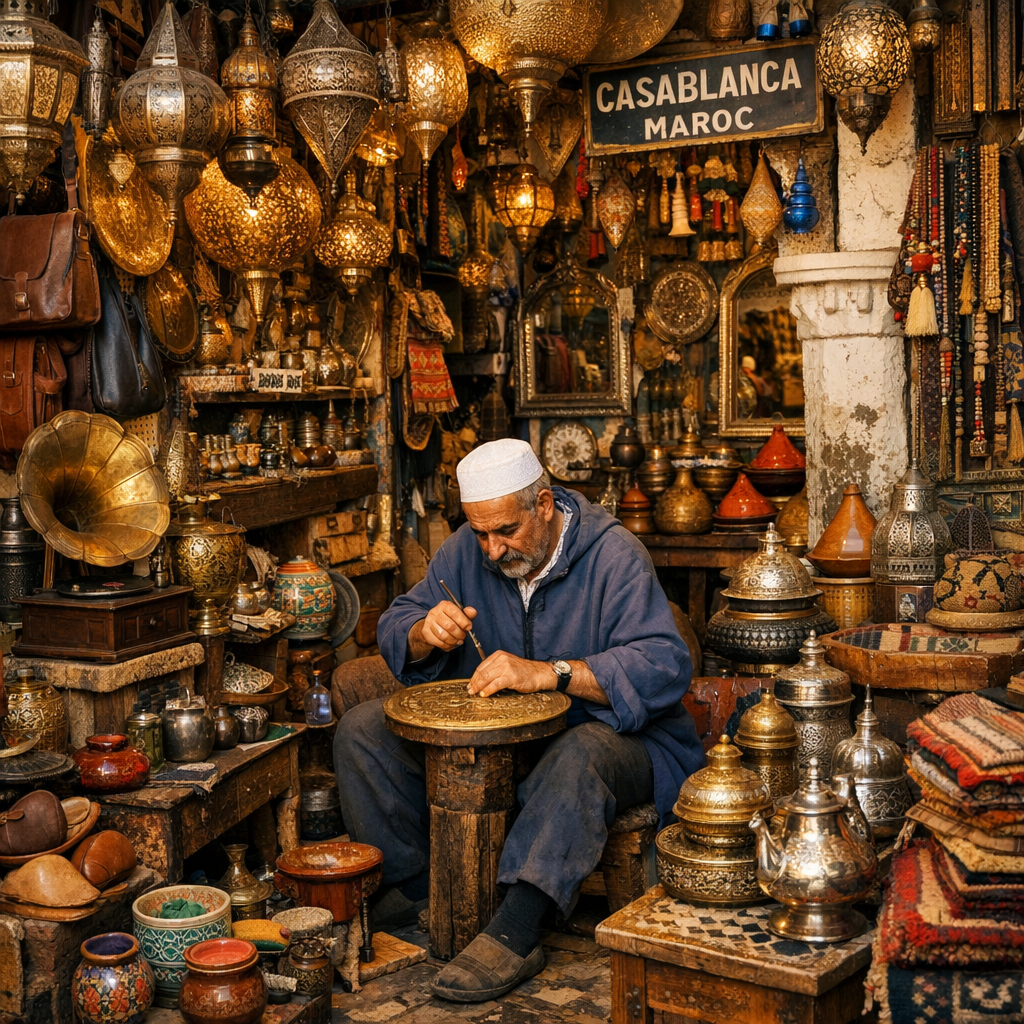
Casablanca is Morocco’s engine for commerce and innovation—but many small and very small businesses here face serious structural challenges. To build resilience and sustainable growth, local entrepreneurs, authorities and support systems need to pull together on several fronts.
Where Small Firms Stumble
Informality remains a major obstacle. A large portion of businesses operate outside the formal sector to avoid heavy tax burdens, social contribution costs, and cumbersome administrative procedures. This gives informal operators a cost advantage, distorts competition, and limits access to financing and public contracts.
Access to finance is another widespread issue. Many small enterprises depend primarily on personal savings or informal lenders. Bank loans or formal equity options are harder to obtain due to opaque collateral requirements, weak financial visibility, and risk aversion on the lenders’ side.
Skills gaps and weak managerial capacity also limit growth. Entrepreneurs often lack training in areas like financial planning, digital tools, marketing and innovation. Many are strong in technical skill but less familiar with navigating regulatory frameworks, managing teams, or scaling operations.
What’s Changing—and How Casablanca Can Benefit
Government reforms are pushing toward formalization. New simplified tax regimes, digitalization of administrative procedures, and regulatory changes aim to make the formal sector more attractive for micro and small business owners.
Certain sectors are showing promise—green energy, argan oil cosmetics, aquaculture, and low-carbon textiles especially—where Casablanca-based firms can tap export markets or value-added supply chains.
Also, there is increased recognition of non-financial support: mentorship, business incubation, peer networks, and legal advice. These are being seen as essential complements to loans and grants.
Steps Forward for Entrepreneurs in Casablanca
- Formalize in stages: Start by registering, complying partially with tax obligations, and gradually meeting regulatory requirements. This reduces risk and boosts eligibility for better resources.
- Build financial visibility: Keep clean records, use digital tools for accounting, and look for guarantee schemes or funds designed specifically for early-stage SMEs.
- Seek non-financial support: Join incubators, local entrepreneur associations, or mentorship programs. These help with business planning, market access, and knowing your rights.
- Focus on specialization and quality: Infuse products or services with unique value—natural ingredients, craftsmanship, green standards—to stand out locally and beyond.
- Collaborate with peers: Cooperatives, joint ventures, and supplier networks help small firms share costs, reach scale, and access broader markets.
Role for Local Authorities and Policy Makers
To enable this transformation, public institutions must continue simplifying regulations, decreasing paperwork, and ensuring consistent enforcement. Public procurement rules should favor small firms and cooperatives.
Financial inclusion programs must be expanded, including guarantee funds and low-interest loans tailored for micro- and small businesses—especially those led by women.
Training and education need investment: vocational training, digital literacy, and business skills should be accessible in all neighborhoods. Digital tools should be subsidized or made easier to adopt.
Lastly, creating forums for feedback from small business owners in Casablanca will help policies stay grounded in daily realities, ensuring that interventions match actual needs.
Casablanca has the assets—location, talent, infrastructure—to be a hub of dynamic entrepreneurship. With coordinated effort, its small businesses can become engines of job creation, inclusive growth, and innovation.